



When healthcare providers trust a medical billing company with sensitive patient data, they’re not just outsourcing paperwork — they’re handing over responsibility for privacy, security, and legal compliance. And at the heart of this responsibility lies one crucial requirement: HIPAA compliance in medical billing.
In a world where cyberattacks are rising and patient trust is everything, understanding how medical billing companies stay compliant is essential for clinics, hospitals, and independent practitioners.
This blog breaks everything down in a simple, practical way so healthcare providers can understand exactly how their billing partner safeguards data, prevents breaches, and protects your practice from penalties.
What Is HIPAA Compliance in Medical Billing?
HIPAA compliance in medical billing means following strict rules to protect patient data during billing, coding, claims submission, payment posting, and revenue cycle management.
Full Explanation:
Medical billing companies handle PHI (Protected Health Information), which includes patient names, diagnosis codes, insurance details, and treatment data.
To follow HIPAA:
- They must secure the data physically and digitally
- Train staff regularly
- Use encrypted systems
- Restrict access
- Prevent unauthorized disclosures
Failure to comply can result in fines up to $1.5 million per violation, legal action, and loss of trust.
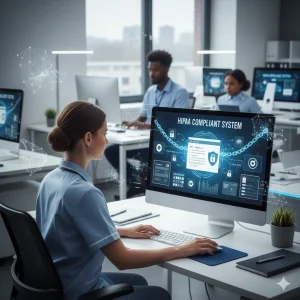
Why HIPAA Compliance Matters in Medical Billing
HIPAA compliance in medical billing is not optional — it is a legal requirement and a long-term safeguard for the healthcare industry.
Why It Matters:
- It protects patients from identity theft
- It prevents reputational damage to clinics
- It avoids costly penalties
- It ensures accurate, secure revenue cycle processes
- It builds trust between providers and billing partners
With rising cybersecurity threats, ensuring data safety is no longer a choice; it’s the backbone of modern healthcare operations.
1. Secure Technology & Encrypted Systems
One of the strongest pillars of HIPAA compliance in medical billing is the use of fully encrypted technology.
How Billing Companies Use Secure Systems
- 256-bit or higher data encryption
- Encrypted emails for PHI communication
- Secure servers and firewalls
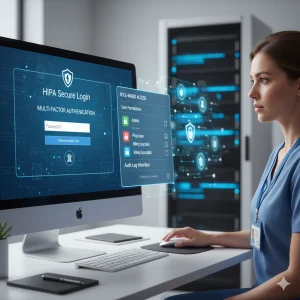
- Multi-factor authentication (MFA)
- Role-based access control
This ensures that only authorized staff can see or modify patient data — and hackers cannot intercept it.
2. Access Control & Staff Authorization
A major part of HIPAA compliance in medical billing is ensuring that only the right people have access to the right data.
Billing companies achieve this by:
- Assigning unique login IDs to every employee
- Using “least privilege” access — minimum required information only
- Restricting sensitive data from junior staff
- Implementing activity tracking and login audits
These steps help prevent internal data breaches, which are surprisingly common in the healthcare sector.
3. HIPAA-Compliant Software & Tools
Medical billing companies use advanced tools specifically built to comply with HIPAA standards.
Tools may include:
- HIPAA-compliant EHR/EMR
- Secure practice management software
- Encrypted clearinghouses
- Secure cloud-based billing platforms
These platforms come with built-in safeguards like:
- Automatic logouts
- Audit trails
- Data backup and recovery
- Secure user roles
Using the right technology is one of the easiest ways to strengthen HIPAA compliance in medical billing.
4. Regular Staff Training & Awareness Programs
Even the most advanced systems fail if employees are not properly trained.
Billing companies conduct:
- Annual HIPAA compliance training
- Cybersecurity awareness programs
- Phishing simulation tests
- Policy and procedure updates
Employees learn:
- What PHI is
- How to handle sensitive data
- How to avoid breaches
- What to do in case of a security incident
Human error causes more than 80% of healthcare data breaches, so training is non-negotiable.

5. Secure Communication Channels
Medical billing involves constant communication — sharing files, claim details, patient information, and payment updates.
To maintain HIPAA compliance in medical billing, companies use:
- Encrypted email systems
- Secure web portals
- VPN connections
- HIPAA-compliant messaging tools
They avoid unsafe methods like:
- Regular SMS
- Non-encrypted email
- Google Sheets without encryption
Safe communication protects PHI at every step.
6. Data Backup, Storage & Disaster Recovery
HIPAA rules require robust data protection and disaster recovery plans.
Billing companies follow protocols for:
- Daily backups
- Off-site storage
- Redundant servers
- Emergency access procedures
- Rapid recovery systems
This ensures that patient data remains safe even during:
- System failures
- Hardware damage
- Cyberattacks
- Natural disasters

7. Business Associate Agreements (BAA)
A medical billing company cannot legally work with a healthcare provider without a Business Associate Agreement (BAA).
BAA includes:
- Responsibilities of both parties
- Data handling rules
- Security measures required
- What happens in case of a breach
It’s the foundation of HIPAA compliance in medical billing, ensuring transparency and accountability.
8. Regular Internal & External Audits
Billing companies conduct routine audits to identify weaknesses.
Audits include:
- Security risk assessments
- Logging and monitoring checks
- Software compliance audits
- Staff compliance checks
These audits ensure continuous improvement and catch vulnerabilities early.
9. Data Minimization & Secure Disposal
Billing companies keep only the data they absolutely need — nothing extra.
When data is no longer required, they dispose of it using:
- Secure digital wiping
- Shredding of printed documents
- Encrypted archive storage
Data minimization reduces the risk of breaches significantly.

10. Proactive Cybersecurity Protection
Modern billing companies use advanced security tools, including:
- Anti-virus & anti-malware
- Intrusion detection systems
- Penetration testing
- Threat monitoring tools
Because cyberattacks in healthcare are increasing, staying one step ahead is essential for HIPAA compliance in medical billing.
Benefits of Working with a HIPAA-Compliant Medical Billing Company
Choosing a secure billing partner offers clear advantages:
Benefits:
- Reduced risk of data breaches
- Fewer rejected claims
- Faster revenue cycle
- Peace of mind for providers
- Stronger patient trust
- Legal protection
- Unified compliance documentation
This makes HIPAA compliance not just a requirement — but a competitive advantage.

Frequently Asked Questions
1. What is HIPAA compliance in medical billing?
Short answer: It is the legal process of protecting patient health information at every stage of billing and revenue cycle management.
2. Do billing companies need a BAA?
Yes. A Business Associate Agreement is legally mandatory before any data exchange.
3. How do medical billing companies secure PHI?
Through encryption, access control, secure servers, audits, and staff training.
4. What happens if a billing company violates HIPAA?
They may face heavy penalties, lawsuits, and termination of contracts.
5. How can clinics check if a billing company is HIPAA compliant?
Request:
- Their BAA
- Compliance certificates
- Audit reports
- Security protocol documentation
In a fast-evolving digital world, HIPAA compliance in medical billing is more important than ever. A trusted billing company doesn't just manage claims — it protects your practice, your patients, and your reputation.
By partnering with a secure, compliant, and knowledgeable billing service, healthcare providers can focus on what matters most: delivering quality care.
Author Info
Author: Mangesh
Last Updated: November 2025
Category: Healthcare / Medical Billing
Follow Us: facebook.com | instagram.com | linkedin.com | BackBoneDataSolutions.com