



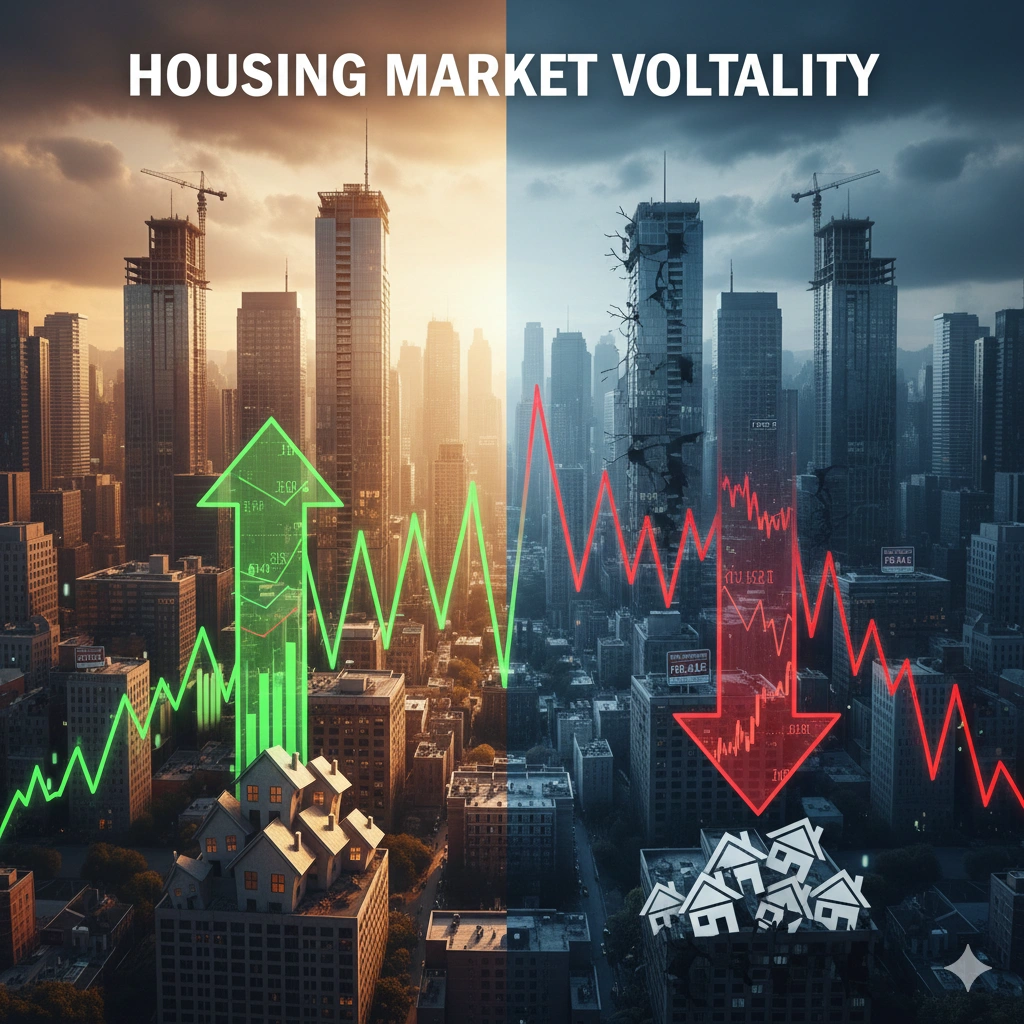
Real estate markets rarely stay still. Interest rate changes, economic uncertainty, government policies, and buyer sentiment can cause prices to rise quickly—or fall just as fast. In such conditions, accurate property valuation becomes more complex and more important than ever.
This is where real estate appraisal companies play a critical role. Understanding how professionals manage real estate appraisal market fluctuations helps buyers, sellers, lenders, and investors make confident decisions even during unstable times.
Why Market Fluctuations Challenge Property Valuation
Rapid market changes make recent sales unreliable, forcing appraisers to rely on deeper analysis and multiple valuation techniques.
In stable markets, appraisers can easily rely on recent comparable sales. However, during volatile periods, prices from even three months ago may no longer reflect reality.
Key challenges include:
- Limited relevant comparables
- Sudden price corrections
- Emotional buyer or seller behavior
- Increased lender scrutiny
Managing real estate appraisal market fluctuations requires experience, data interpretation, and professional judgment.
How Appraisers Detect Rapidly Changing Market Conditions
Before adjusting values, appraisal companies must first confirm that a market shift is happening.
They monitor:
- Local and regional price trends
- Days on market changes
- List-to-sale price ratios
- Inventory levels
- Interest rate movements
Recognizing early signs of real estate appraisal market fluctuations allows appraisers to adjust methods before inaccuracies occur.

Using the Most Recent Comparable Sales
In volatile markets, appraisers prioritize the most recent sales, even if they are fewer or slightly less similar.
When prices are rising or falling quickly, appraisal companies:
- Use the newest sales available
- Reduce reliance on older comparables
- Apply stronger time-based adjustments
This approach ensures the valuation reflects current market behavior, not outdated trends.
Applying Market Condition (Time) Adjustments
One of the most important tools for handling real estate appraisal market fluctuations is the market condition adjustment.
What this means:
If prices are increasing by 1% per month, a sale from three months ago may need a +3% adjustment. If prices are falling, the adjustment works in reverse.
This technique helps align older data with present-day values.
Analyzing Active Listings and Pending Sales
In unstable markets, closed sales alone don’t tell the full story.
Appraisers also review:
- Active listings (seller expectations)
- Pending sales (buyer behavior)
- Price reductions and listing withdrawals
These indicators help confirm whether real estate appraisal market fluctuations are upward, downward, or stabilizing.

Balancing Multiple Valuation Approaches
During market swings, appraisers rely on more than one valuation method to reduce risk.
Real estate appraisal companies may combine:
- Sales comparison approach
- Cost approach
- Income approach (for rental properties)
Using multiple methods provides a more reliable value during uncertain conditions.
Adjusting Risk Tolerance for Lenders
Lenders become more cautious during volatile markets. Appraisal companies respond by:
- Providing detailed explanations
- Supporting adjustments with strong data
- Avoiding overly aggressive assumptions
Accurate handling of real estate appraisal market fluctuations protects both lenders and borrowers from financial risk.
Handling Rapidly Rising Markets
In fast-rising markets, appraisers must avoid overvaluation caused by bidding wars.
They focus on:
- Sustainable price growth
- Verified closed sales (not inflated offers)
- Reasonable market adjustments
This prevents buyers and lenders from overpaying during hype-driven price spikes.
Handling Rapidly Falling Markets
Declining markets require a different strategy.
Appraisers may:
- Use conservative assumptions
- Place greater weight on recent distressed sales
- Watch for increasing inventory and longer selling times
Accurate response to falling prices is essential when navigating real estate appraisal market fluctuations.
Clear Documentation and Transparency
Transparent reporting builds trust during unstable market conditions.
Professional appraisal reports clearly explain:
- Why adjustments were made
- How market conditions influenced value
- What data sources were used
This transparency is crucial during periods of rapid change.
Why Experience Matters in Volatile Markets
Not all appraisers are equally equipped to handle market instability.
Experienced appraisal companies:
- Understand local micro-markets
- Recognize short-term trends vs long-term shifts
- Avoid emotional or speculative valuation
Handling real estate appraisal market fluctuations requires more than software—it requires judgment.
Impact on Buyers, Sellers, and Investors
Accurate appraisals during market swings:
- Protect buyers from overpaying
- Help sellers price realistically
- Support investors with risk-aware decisions
Reliable valuation acts as a stabilizing force in uncertain markets.

Frequently Asked Questions
Q1: Are appraisals less accurate in volatile markets?
Short Answer: No, if handled by experienced professionals using proper adjustments.
Q2: Can appraisals stop deals during falling markets?
Sometimes, but they protect buyers and lenders from inflated pricing.
Q3: Do rising markets guarantee higher appraisals?
Not always—appraisers focus on sustainable value, not hype.
Q4: How often do market condition adjustments change?
They are updated continuously based on local data trends.
Real estate markets will always experience cycles of growth and correction. The role of appraisal companies is not to predict the future, but to accurately reflect present conditions.
By applying data-driven adjustments, professional judgment, and transparent reporting, appraisal experts ensure accurate valuations even during intense real estate appraisal market fluctuations. This stability is essential for confident real estate decisions in uncertain times.
Author: Mangesh
Last Updated: December 2025
Category: Home Appraisal & Real Estate Valuation
Follow Us: facebook.com | instagram.com | linkedin.com | BackBoneDataSolutions.com