


Table of Contents
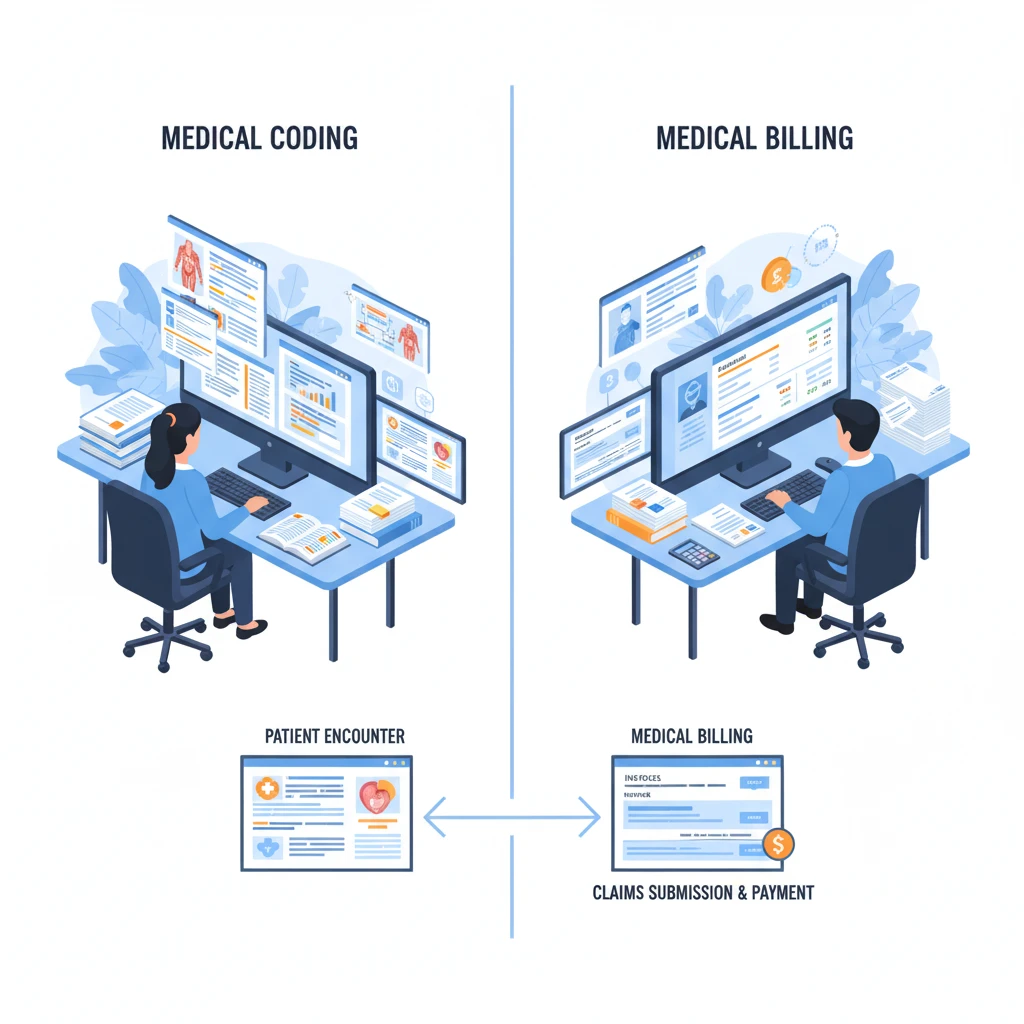
difference between medical billing and medical coding
In the healthcare industry, accurate financial management is essential. Two critical components of this process are medical billing and medical coding. While often mentioned together, they are distinct functions with separate roles in managing healthcare payments.
Many healthcare providers ask, “what is the difference between medical billing and medical coding?” Understanding this difference is essential for smooth revenue cycle management, avoiding claim denials, and ensuring compliance with insurance regulations.
In this guide, we’ll break down the key differences, processes, and benefits of both medical billing and medical coding. difference between medical billing and medical coding
What Is Medical Coding?
Medical coding is the process of translating a patient’s diagnosis, treatments, and procedures into standardized codes. These codes are used by insurance companies to process claims and reimburse healthcare providers.
Key Responsibilities of Medical Coders:
- Assigning ICD-10 codes for diagnoses
- Assigning CPT and HCPCS codes for procedures
- Reviewing medical records for accuracy
- Ensuring compliance with healthcare regulations
- Collaborating with healthcare providers to clarify treatment details
Medical coding is crucial because accurate codes ensure correct billing, minimize claim rejections, and maintain compliance with healthcare regulations.
What Is Medical Billing?
Medical billing is the process of submitting and following up on claims to insurance companies and patients. Medical billers use the codes provided by coders to generate invoices and ensure healthcare providers receive timely payment.
Key Responsibilities of Medical Billers:
- Preparing and submitting claims to insurance companies
- Posting payments and reconciling accounts
- Following up on denied or unpaid claims
- Generating patient invoices and handling billing inquiries
- Reporting revenue cycle performance to healthcare management
Medical billing ensures that healthcare providers are compensated accurately and efficiently for the services they provide.

Key Differences Between Medical Billing and Medical Coding
| Feature | Medical Coding | Medical Billing |
|---|---|---|
| Definition | Assigns standardized codes to diagnoses and procedures | Uses codes to create and submit claims to insurance and patients |
| Primary Goal | Accurate documentation of medical services | Ensuring timely and correct payment for services |
| Focus | Clinical and documentation accuracy | Financial and revenue cycle management |
| Skills Required | Knowledge of ICD-10, CPT, HCPCS, medical terminology | Knowledge of billing software, insurance processes, and account reconciliation |
| Interaction | Works with medical records and physicians | Works with insurance companies and patients |
Understanding these differences clarifies why both functions are essential and often work hand-in-hand for effective healthcare financial management.
How Medical Coding and Billing Work Together
The workflow of medical coding and billing is closely connected:
- Patient Visit: The patient receives treatment or consultation.
- Documentation: Physician notes and records are documented.
- Medical Coding: Coders assign codes to diagnoses and procedures.
- Billing: Billers use codes to submit claims to insurance companies.
- Payment Posting: Payments are received, posted, and reconciled.
- Denial Management: Any denied claims are corrected and resubmitted.
- Patient Invoicing: Remaining balances are billed to patients if needed.
This collaboration ensures that claims are accurate, payments are timely, and errors are minimized.
Importance of Understanding the Difference
Knowing the difference between medical billing and medical coding benefits healthcare providers in several ways:
Improved Revenue Cycle
Accurate coding and billing reduce claim denials, speeding up payment and improving cash flow.
Compliance with Regulations
Proper coding ensures compliance with HIPAA and insurance rules, while accurate billing prevents legal and financial penalties.
Enhanced Patient Experience
Correct billing reduces confusion and disputes, improving trust and patient satisfaction.
Efficient Workflow
Understanding the distinct roles allows healthcare facilities to assign responsibilities effectively and streamline operations.

Common Challenges
Even with professional coders and billers, challenges exist:
- Coding Errors: Mistakes in code assignment can delay or deny claims.
- Claim Denials: Incorrect billing details or missing information can result in rejected claims.
- Insurance Complexity: Navigating multiple insurance plans is challenging.
- Regulatory Updates: Constant changes in coding standards require ongoing training.
A professional medical billing company or healthcare billing team helps overcome these challenges efficiently.
Benefits of Outsourcing Billing and Coding
Many healthcare providers outsource their billing and coding tasks to specialized companies. Benefits include:
- Access to certified coders and experienced billers
- Reduced administrative workload
- Faster and more accurate claim processing
- Cost savings on in-house staff and software
- Better financial reporting and revenue cycle insights
Outsourcing ensures accuracy, compliance, and efficiency in managing healthcare finances.
Understanding the difference between medical billing and medical coding is critical for healthcare providers aiming for a smooth revenue cycle. While coding focuses on accurate documentation of services, billing ensures that payments are collected efficiently.
Both functions are interdependent and essential for minimizing errors, avoiding claim denials, maintaining compliance, and optimizing revenue. Whether managed in-house or outsourced to a professional medical billing company, integrating accurate coding and billing processes is vital for the financial health of any healthcare organization. difference between medical billing and medical coding